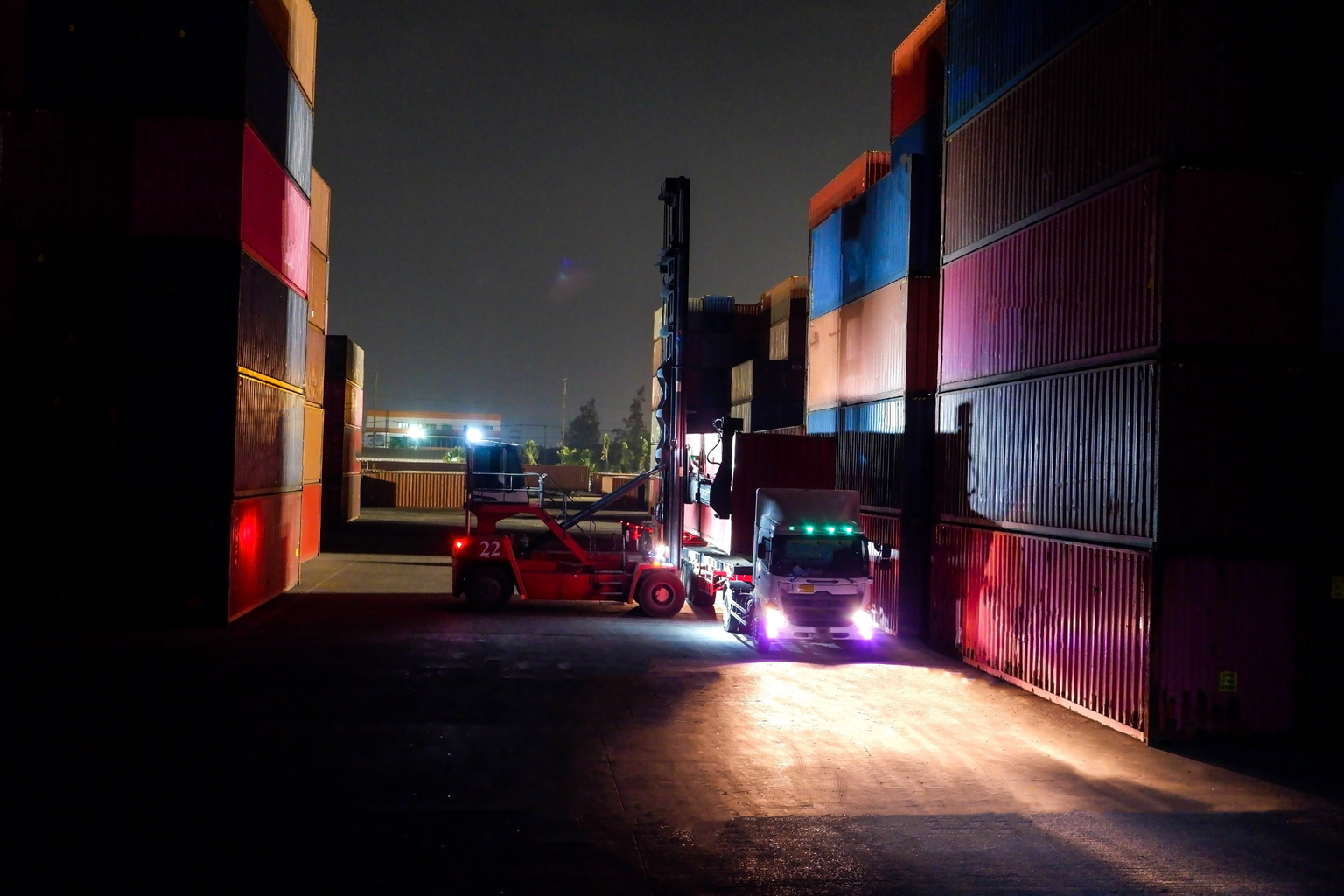
40,000 pounds of beer. Loaded onto a trailer, waved through the gate, gone. The paperwork looked right. The driver looked right. And now Inc. is calling it one of the largest cargo thefts ever recorded.
Here is the warehouse security failure nobody plans for, and the one that should keep a distribution manager awake. Nobody broke a window. Nobody cut a fence. The freight walked out the front door behind a driver who looked legitimate and a load number that matched the system. Your cameras caught all of it in perfect focus, and not one frame of that footage did anything to stop the truck from leaving.
Contents
- The Bottom Line
- How does a fraudulent pickup beat warehouse security?
- What full trailers of product actually cost you
- Cameras record theft. They do not prevent it.
- What real warehouse security looks like on a live dock
- One warehouse security check you can run on your own dock today
- Let us pressure test your dock
The Bottom Line
- The biggest warehouse security losses are not break ins. They are pickups that looked authorized until the load never showed up.
- Most warehouse security is built to record. It is not built to question the driver, check the seal, or catch paperwork that does not match the manifest.
- One person at the gate with the authority to verify, delay, and call it in changes the whole equation.
How does a fraudulent pickup beat warehouse security?
A thief books or hijacks a real load, shows up with documents that pass a glance, and gets the freight loaded before anyone thinks to push back. It works because most docks are built for speed, and most warehouse security is built for the wrong threat. Trucks are stacked in the yard, the schedule is tight, and the whole culture of the floor is load and go.
Picture your busiest outbound afternoon. Six trailers in the doors, two more waiting in line. A driver you have never seen hands over a load number that pings clean. Your dock crew gets measured on throughput, not fraud. They are not going to stall a truck and interrogate a stranger while the schedule slips behind them. So the pallets go on. The seal goes on. The trailer rolls out.
The theft is already done. It just does not feel like one yet. It feels like a normal Tuesday until the receiving customer calls three days later asking where their shipment is.
What full trailers of product actually cost you
The wholesale value of the missing freight is the number everyone quotes. It is also the smallest line on the bill.
You pay to replace or reproduce the product. You pay expedited freight to make the customer whole. Then come the management hours: the police report, the insurance claim, the internal review. Your carrier relationships take a hit. And if that freight was headed for a retail promotion or a seasonal window, you miss the window, and no reimbursement covers that.
Then there is the part nobody puts on a spreadsheet. These crews compare notes. A dock that loaded a bad truck once, cleanly, with nobody asking a single question, is a dock worth hitting again. The police report will not bring your freight back. It documents a loss you already took.
Cameras record theft. They do not prevent it.
Most warehouse security vendors will not tell you this plainly, so I will. A camera is a witness, not a guard. It hands you a clean recording of a crime you did nothing to stop. In a fraudulent pickup, the footage is close to worthless anyway, because on video the theft looks exactly like a legal shipment. There is nothing suspicious to see. That is the entire design of the scheme.
Real warehouse security breaks the pattern with a person who has the authority to slow things down. Someone at the gate who checks the driver’s identity against the pickup, confirms the load number against the actual manifest and not just the screen, inspects the seal, and stops the truck when something does not line up. Someone allowed to say the trailer waits until we verify this.
That one point of friction is exactly what these crews are betting you do not have.
What real warehouse security looks like on a live dock
Good warehouse security is not one guard by a door trying to look intimidating. It is coverage built around your real risk hours and your real gate flow.
On a big yard, mobile patrol means the perimeter, the trailer pool, and the dock all get checked on an irregular schedule, so nobody can time the gaps. At the gate, verification becomes a step nobody skips, even at 4pm with trucks backed up out the driveway. And because product moves at every hour, the coverage runs around the clock, not just on the day shift when management happens to be watching.
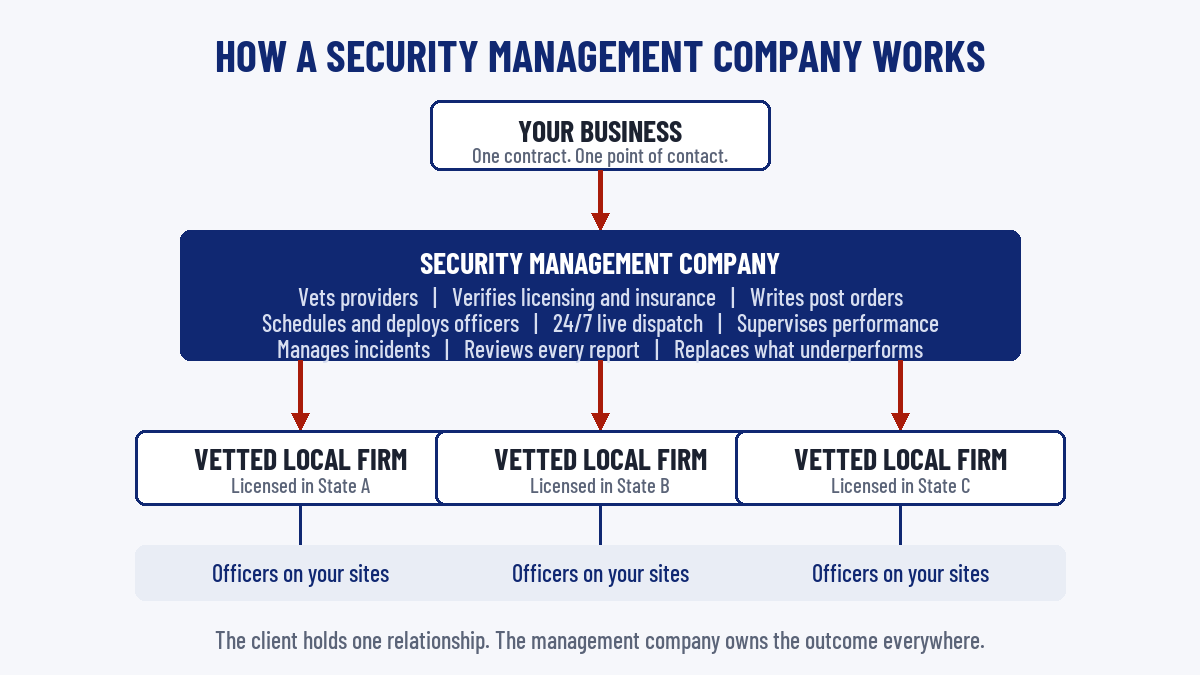
Here is where our model earns its keep. Nationwide runs live in house dispatchers. Not a call center, not an answering service. When something looks wrong at your dock, the officer is talking to a real person who is already reaching out to you. The moment an incident happens, we call you. Nothing gets buried until the morning report, nobody waits to see if it sorts itself out. If a truck’s paperwork does not match and the driver turns aggressive, you know while the trailer is still on your property, not three days later from a customer.
That is the difference between stopping a fraudulent pickup at the gate and filing a claim for 40,000 pounds of anything.
One warehouse security check you can run on your own dock today
Walk your outbound process and ask a blunt question. Who, specifically, is allowed to stop a truck that already has a door assignment?
If the honest answer is nobody, or it is a dock supervisor whose entire job gets measured on how fast freight moves, you do not have a control. You have a hope. Then ask how a driver’s identity gets checked against the pickup right now. If the answer is the load number matched the system, you just described the exact gap the Pabst thieves are suspected of walking through.
Then ask the one that stings. If a bad load left your dock this afternoon, how many days pass before anyone notices?
Let us pressure test your dock
One distribution center or forty, the warehouse security exposure is the same and it scales with you. A conversation costs nothing and might show you a gap you have been loading trucks through for years.
Call us at 888-980-9118 or reach out for a same day quote. We will walk through your gate flow, your risk hours, and what your warehouse security has to look like before the next truck backs up. If you want the full picture first, our security guard services overview lays out how the model works.