When a Retail Robbery Turns Violent: What It Really Takes to Protect Your Stores
Related: The Security Bidding Wars, on what the cheapest security bid leaves out.
A Guard Got Stabbed Doing His Job
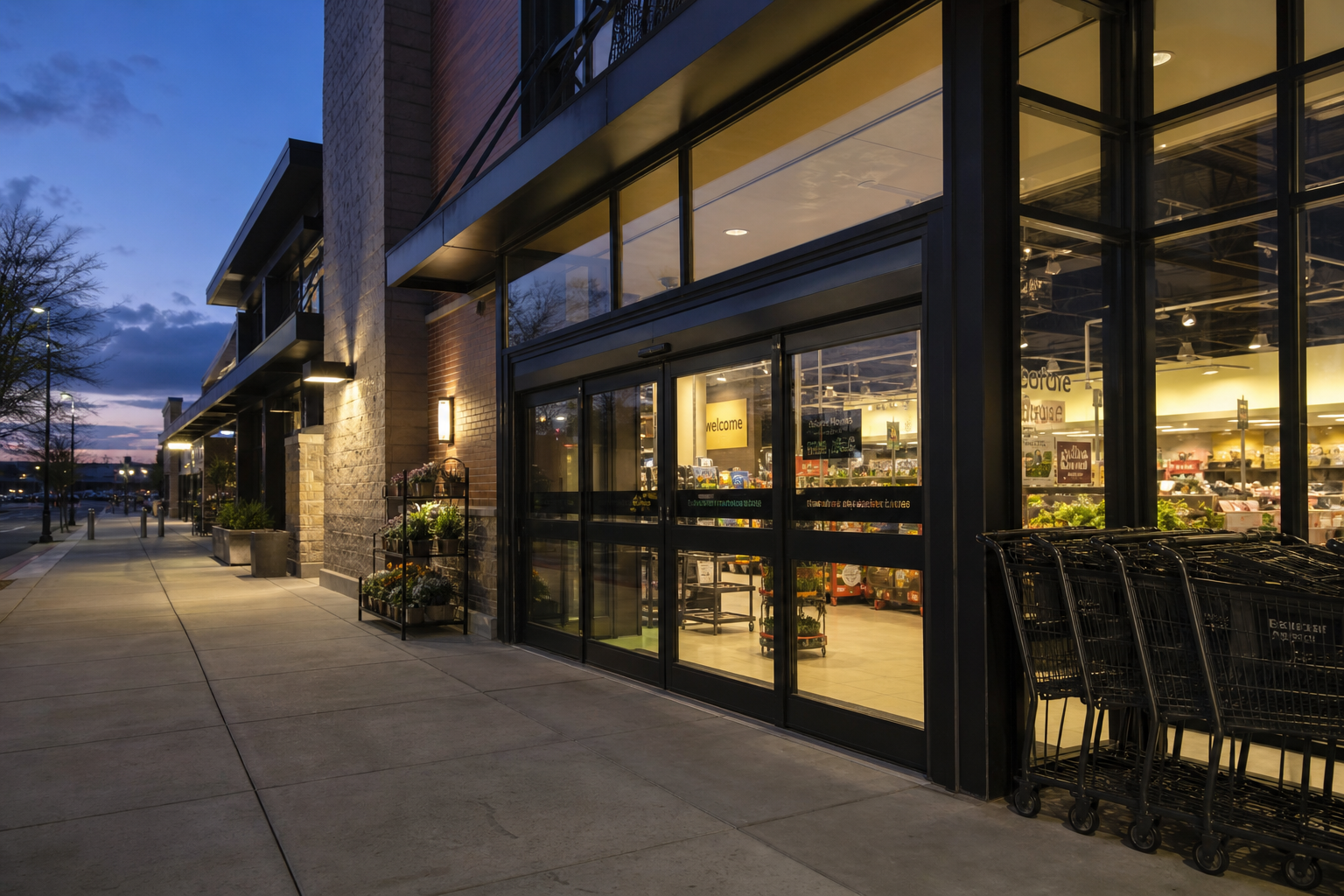
Three teenagers robbed a grocery store. A security guard stepped between them and the people inside, and they put a knife in him. Police are still looking for them. The guard did exactly what a guard is supposed to do. He should not have ended his shift bleeding on the sales floor.
If you run retail across more than one location, this is not somebody else’s headline. This is a preview of your worst shift. So ask yourself the honest question: when this happens at one of your stores, who is running the response, and how fast are they moving?
The Problem Is Not Crime. It Is Your Gaps.
Retail crime does not spread evenly. It clusters. Certain stores, certain hours, certain weak spots that never get fixed. One violent robbery costs you more than merchandise. Your staff and customers are in the room. Your liability exposure jumps. And the store can go dark for a day or more while police work the scene.
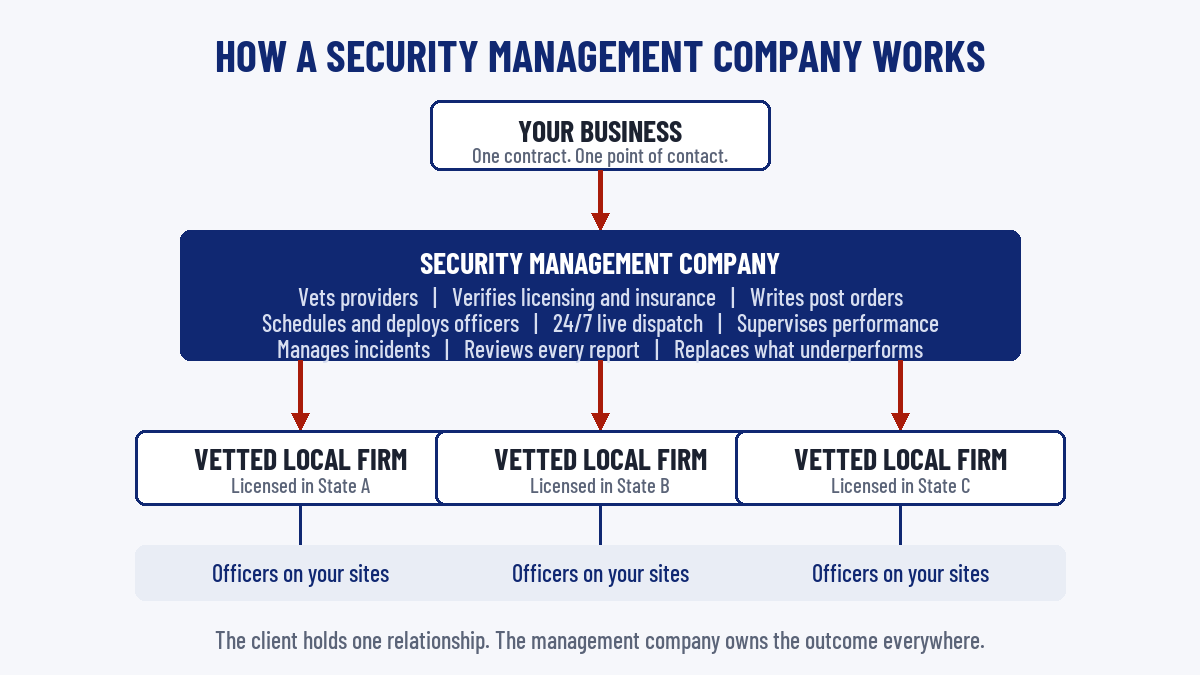
Consistency is where most operators fall apart. You have real coverage at the flagship and almost nothing at the store 40 miles out. Different sites, different guard companies, different rules, no shared standard. People get hurt in that gap.
Drop a guard into a store with no clear instructions and you have forced him to improvise. Improvising against an armed robbery is how a routine call turns into a stabbing.
What Good Security Buys You
Deterrence comes first. A visible, professional guard changes the math for anyone deciding whether to walk in and try something. Most thieves want the easy target. The point is to make sure that target is not your store.
When deterrence fails, the priority flips. No guard should be fighting an armed suspect over inventory. The job becomes protecting life, creating distance, and getting help on the way. That does not happen because someone got brave in the moment. It happens because someone prepared. Here is what that preparation looks like.
- Post orders written for that specific store. What to watch. When to step in. When to back off. Exactly who to call. Every guard should know it cold before their first shift.
- De escalation as the default. Trained guards work to shrink a conflict, not feed it. Property is replaceable. The person behind the counter is not.
- The person on the floor, vetted. A license gets someone in the door. It proves nothing about judgment. We vet the licensed subcontractors we deploy, because the individual standing in your store is the whole game.
- Coverage built around actual risk. The right guard, at the hours that matter, at the stores that need it. Not the same generic plan copied to every address.
Then there is what happens after the alarm trips. Most security operations come apart right here. We do not.
Our dispatch runs 24/7 and it is staffed in house. Not a call center. Not an answering service that takes a message and phones someone in the morning. Live people who know your account and can move at 3 a.m.
When something happens at your store, we call you. We do not let you learn about it from the news or from a manager the next day. No hiding, no excuses. Clients stay with us because we pick up the phone and tell the truth, and that is what you want on the worst night your store will ever have.
Five Questions to Ask This Week
You do not need a contract to start finding your gaps. Ask these about the setup you already have.
- Do your guards have written post orders for each location, or are they winging it?
- Have your guards been trained in de escalation, and can your provider prove it?
- Robbery hits at 2 a.m. Who answers the phone, and how fast do you hear about it?
- Is coverage matched to real risk, or is every store running the same plan?
- Do you know who is standing in your store tonight, and how they were vetted?
If you cannot answer any of those clearly, you just found the gap. Close it before an incident does it for you.
The Bottom Line
A stabbed guard is what a violent situation looks like when it meets a system that was never built to handle it. The fix is not luck. It is preparation, the right people, and a team that answers the phone and tells you the truth when things go wrong. If you want that across your locations, call us at 888-980-9118 and we will talk through where you actually stand.