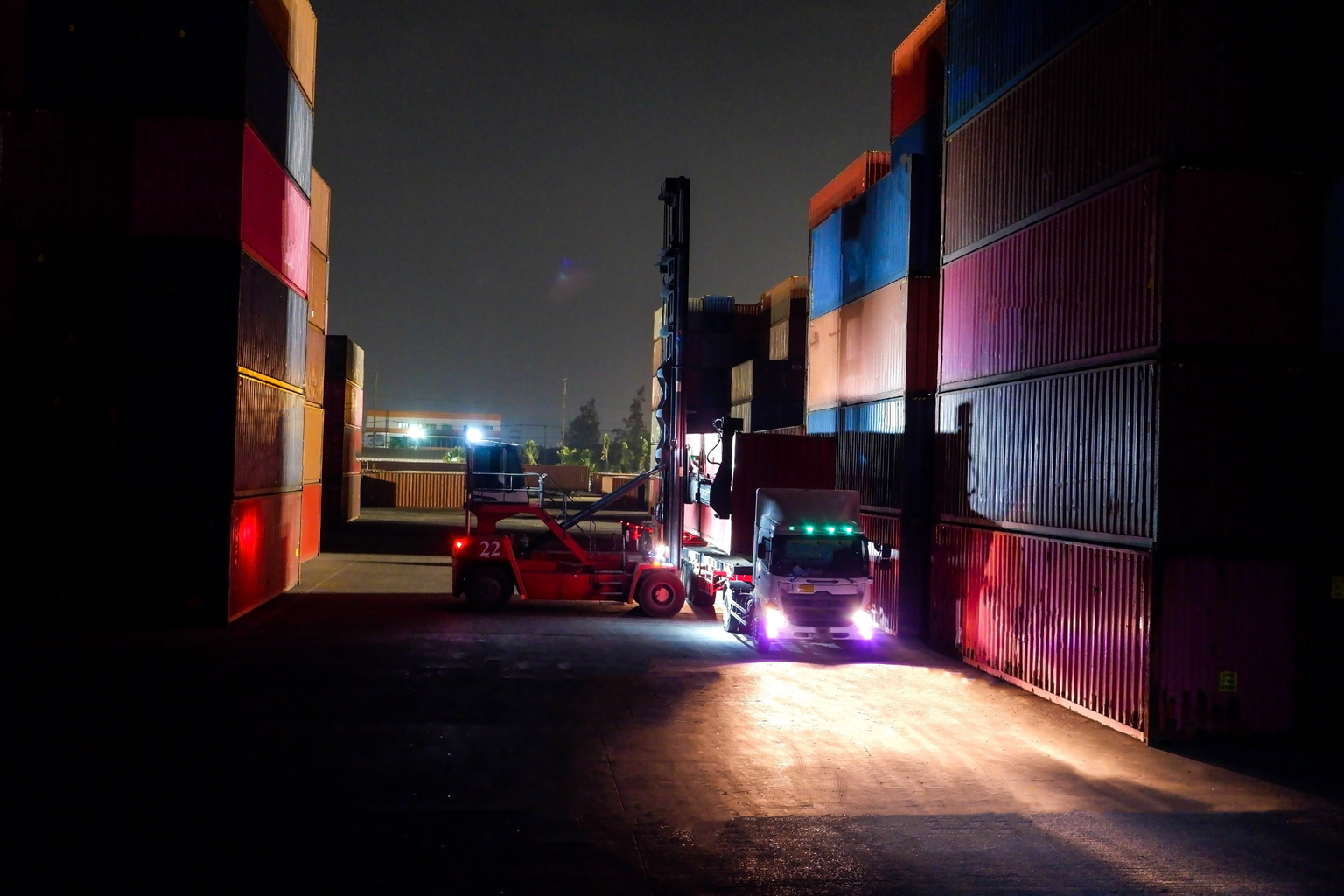
Wednesday evening the last shift leaves. Monday morning the building wakes up. That is 108 hours with a full yard and nobody who can act on a thing they see. Thieves know that math better than you do. They read the calendar the same way you do, they watch the last trucks roll out Friday, and they wait for the yard to go quiet. Holiday cargo theft keeps climbing because the crews doing it have learned to pick the exact hour your dock goes still.
A recent report covered by Risk & Insurance lays it out. Holiday cargo theft is not just up. It is sharper. The crews have refined their timing and their tactics. They are not smashing random doors. They pick the window you left open.
The Bottom Line
- Holiday cargo theft peaks in the exact hours your warehouse runs on a skeleton crew or nobody at all.
- The gap is predictable, which means it is defendable, if someone is actually watching during it.
- Scheduled mobile patrol and on site guards, run through true 24 hour dispatch, close the window the thieves are counting on.
In this post
- Why does holiday cargo theft spike this time of year?
- The quiet part nobody in this industry says out loud
- What holiday cargo theft actually costs an operator like you
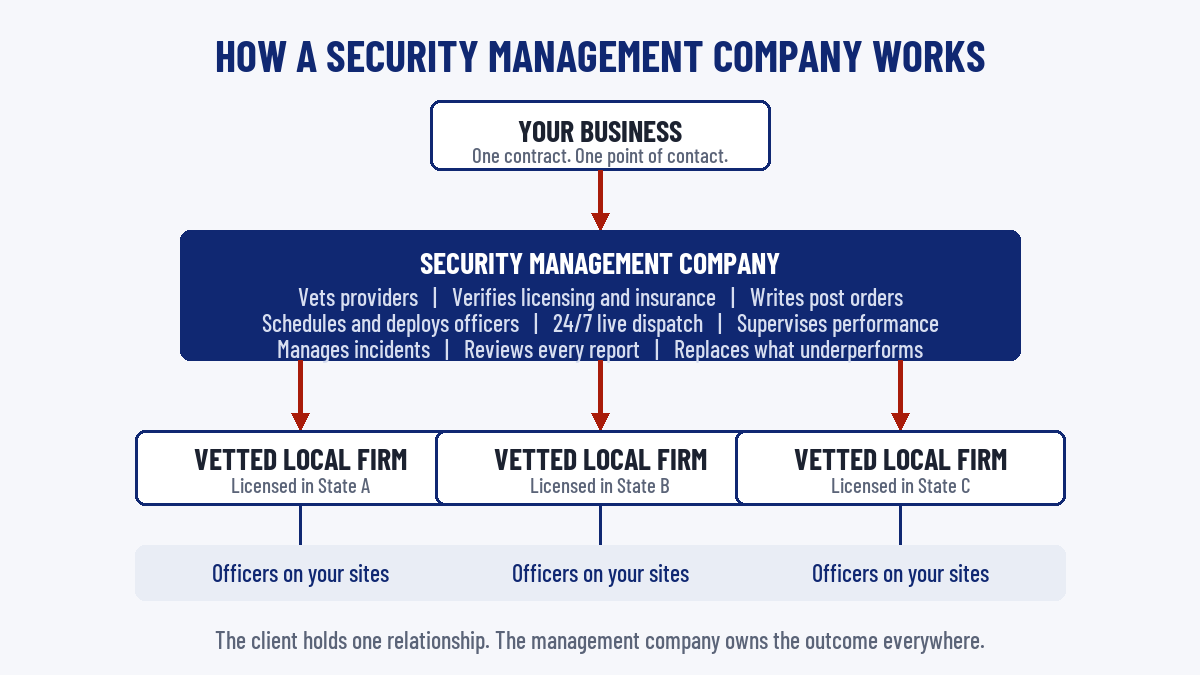
- What a security management company changes about this
- What I would ask before the price column decides
- Holiday cargo theft closes when someone is standing in the window
Why does holiday cargo theft spike this time of year?
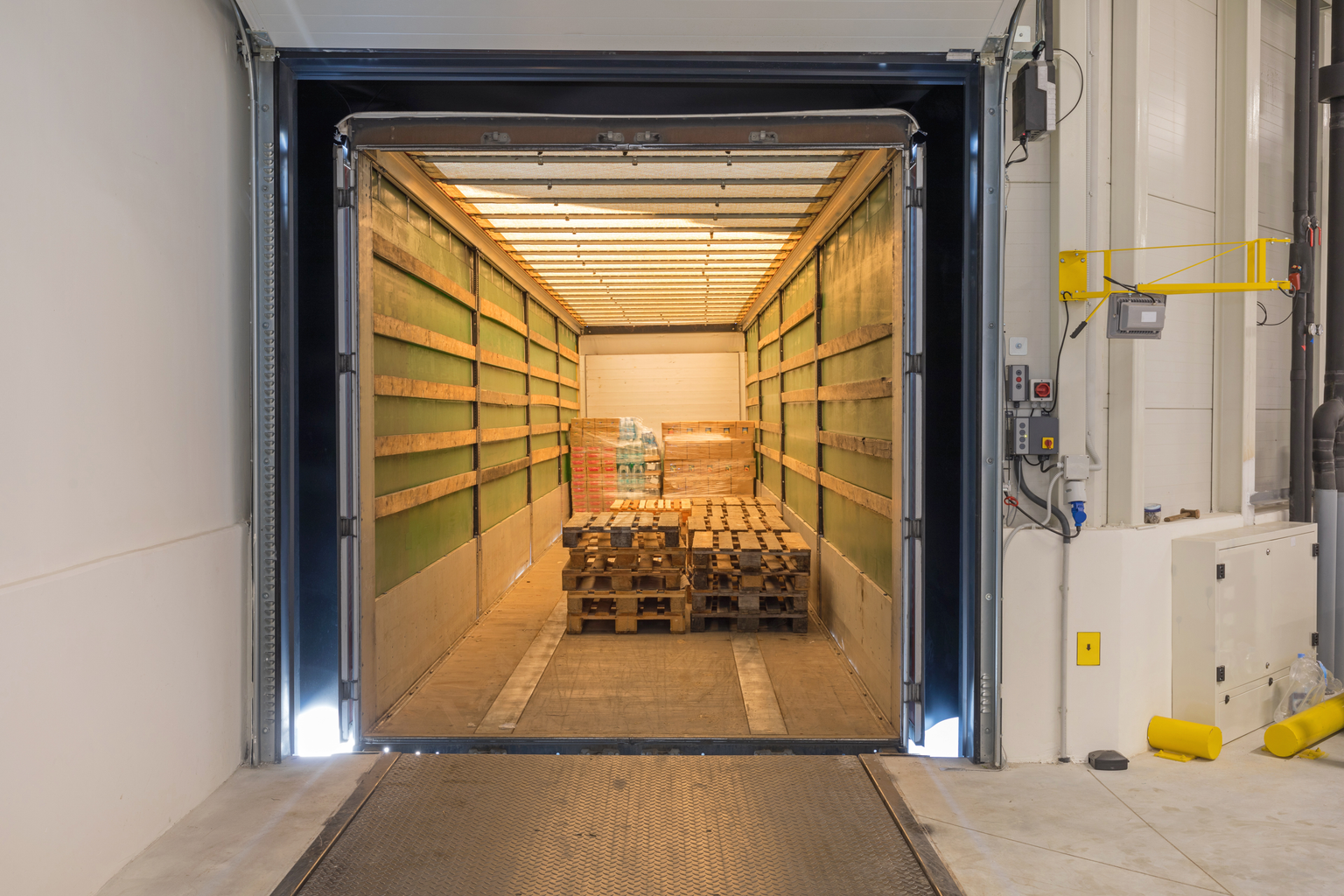
Because your building tells them when to come. Holiday cargo theft rises when the loads are highest and the coverage is lowest. Both peak in the same weeks. December is when your trailers are fullest. It is also when your staff is thinnest and your managers are traveling. The yard sits loaded through a long weekend.
Think about what a four day shutdown really means. Say the last shift leaves Wednesday evening. The building does not stir until Monday. That is roughly 108 hours. Read that again. More than a hundred hours where a full yard sits and nobody has the authority to notice trouble and move on it.
A thief does not need all 108. They need 20 minutes inside one of them. Holiday cargo theft crews have learned to find the quietest one.
The quiet part nobody in this industry says out loud
I will say the part the sales sheet never says. Most warehouse security plans are built for the days the warehouse is busy, not the days it is empty. That is backwards. The days you are staffed are the days you least need help. The danger sits in the dark stretch when the building is loaded and unwatched. That is the stretch most plans ignore.
Cameras record the theft. They do not stop it. A locked gate slows a professional crew by a few minutes. An alarm that dials a call center in another state earns you a callback and a note in a queue. None of that is a person standing where the trucks are, at 3am on the Saturday of a holiday weekend, ready to call it in the second it starts.
Holiday cargo theft is a timing problem. You beat a timing problem with presence, on the schedule that matters, not the schedule that is convenient.
What holiday cargo theft actually costs an operator like you
The stolen freight is the headline number. It is not the real bill. The real bill is what happens after.
One trailer gone is a customer whose order does not arrive. It is a claim, a deductible, and an insurance conversation that follows you into next year’s premium. It is your team spending the week after the holiday reconstructing what left the yard and when, instead of running the operation. It is the phone call to the account that trusted you with their goods.
Now walk it across your footprint. If you run warehouse and distribution operations in six states, you do not have one empty dock this holiday. You have six. Are all six covered the same way during the shutdown? Do you actually know? Or does coverage depend on which local vendor each site signed years ago, at a service level nobody has checked since?
That is the honest question. Not whether you have security. Whether you have it in the same place the thieves are looking.
What a security management company changes about this
Here is where one contract beats six. When you run each location through its own local guard firm, you are the one stitching it together. You are the one hoping the site in one state schedules its patrols as tightly as the site three states over. During a shutdown, that hope is the whole plan.
We do it differently. You hold one contract with us. The local licensed firm answers to us, and we answer to you. Before any officer stands a post, we verify that firm’s license and insurance certificate. Not after an incident. Before. The middle of a loss is a brutal time to learn your vendor’s coverage lapsed in October.
Then there is the part that matters most on the night it counts. Our dispatch runs 24 hours, staffed in house, answered by a person with authority. Not a ticket. Not a call center reading a script in a different time zone. When something moves at your dock at 3am on the Saturday between Christmas and New Year’s, a person picks up, makes a decision, and contacts you the moment it happens. We do not sit on incidents. We do not hide them until Monday.
You can run this two ways during the holiday window. Scheduled mobile patrol that puts a marked vehicle through your yard on an irregular pattern, so a crew casing the place never learns your rhythm. Or a posted officer on 24 hour guard coverage when the load justifies a body on site the whole stretch. For a lot of operators the answer is both. Patrol across several sites, posted coverage on the one holding the most freight.
If a local firm underperforms, we replace it inside the same contract, usually with no gap in coverage. You do not run a new procurement in the middle of December. You call us. We handle the swap. That is the difference between managing security and managing vendors.
What I would ask before the price column decides
If you are pricing holiday coverage right now, or assuming last year’s setup still holds, put three questions on the table before anyone signs.
Who is physically at my highest value site during the shutdown, and on what schedule? Not what the contract says in general. The specific nights, the specific hours, the specific gap. If the answer is a camera and an alarm, you have a record of the theft, not a defense against it.
When the call comes in at 2am on a holiday, who answers, and can they decide anything? A dispatcher who can dispatch is worth ten voicemail boxes. Ask to hear it. Call the line at an odd hour before you sign and find out who picks up.
Is every one of my locations covered to the same standard, and can one person prove it? If coverage lives in a folder of separate vendor contracts you have not read since signing, you do not have a plan. You have a pile of paper and a hope. Holiday cargo theft does not respect either.
If you need coverage stood up fast because a gap just became obvious, that is what our emergency and same day coverage exists for. The season does not wait for your procurement cycle.
Holiday cargo theft closes when someone is standing in the window
Holiday cargo theft is not a mystery and it is not bad luck. It is a predictable gap, exploited by people who studied the calendar. The freight is loaded. The building goes dark. The crew waits for the quietest hour. That is the whole play, every year. It works because most operators leave the window open.
You close it by putting a person in it, on the right schedule, with someone who answers when it matters and one point of contact who owns every site. Not six vendors owning none of it together.
If you have holiday coverage bids on your desk, send them to me. I will tell you what each one left out, and where the gap sits that a cargo crew would find first. Call us at 888-980-9118 or reach out through our team to get a same day quote before the docks go quiet for the season.
Gary Zamperelli is Executive Director of Nationwide Security Service, a security guard management company that arranges and supervises vetted, licensed security coverage in all 50 states from one point of contact.